
Unveiling the Lost Capital: A Complete Guide to Koh Ker Temple and Its Ticket Price
Deep within the steamy jungles of northern Cambodia, far from the well-trodden path to Angkor Wat, lies a place where time stands still and nature reclaims its dominion. This is Koh Ker, the enigmatic and short-lived capital of the Khmer Empire. For nearly two decades in the 10th century, under the reign of King Jayavarman IV, this remote site was the epicenter of one of the world’s most powerful civilizations. Today, it is an archaeological zone of breathtaking scale and mystery, home to pyramids that wouldn’t look out of place in Mesoamerica and sculptures of unparalleled artistry.
For the intrepid traveler, a journey to Koh Ker is a pilgrimage into the heart of the Khmer spirit. But such an adventure requires planning. The most common question, and a crucial part of that planning, is: What is the Koh Ker temple ticket price?
This article will not only provide a detailed breakdown of the entrance fees but will also serve as your comprehensive guide to visiting this magnificent, off-the-beaten-track complex.
The Koh Ker Temple Ticket Price Structure
Unlike the temples of Angkor, which require a separate pass, Koh Ker operates on its own ticketing system due to its location in a different province (Preah Vihear). The fees are straightforward and contribute directly to the maintenance and preservation of this remote site.
The standard Koh Ker temple ticket is a flat fee that grants you access to the entire core archaeological zone for one day.
| Ticket Type | Price (USD) | Notes |
|---|---|---|
| Adult (Foreign Tourist) | $15 | Mandatory for all foreign visitors aged 12 and over. |
| Child (Foreign Tourist) | Free | For children under 12 years old. Proof of age may be requested. |
| Cambodian Citizen | Free | Khmers enjoy free entry to their national heritage sites. |
| ASEAN Nationals | $15 | Discounted rate for citizens of ASEAN member countries. |
Important Notes on Purchasing Your Ticket:
- Where to Buy: The Koh Ker Ticket Office is located at the main entrance to the archaeological park. You cannot miss it; it’s a small building on the left side of the road just before you reach the parking area for the main temples. There is no option to buy tickets online in advance. Payment is made directly at the counter.
- Payment: US Dollars are preferred and the price is officially set in USD. You can pay in Cambodian Riel, but the exchange rate used will be unfavorable (e.g., 4000 Riel to $1 instead of the market rate of ~4100). It’s highly recommended to bring the exact dollar amount in clean, untorn bills.
- What’s Included: The ticket includes entry to all monuments within the Koh Ker group. A simple map is usually provided with the ticket, but for a more informative visit, consider hiring a licensed guide at the site or bringing a detailed guidebook.
- Checkpoint: Keep your ticket handy throughout your visit, as there may be random checks by site officials at various temples, particularly at Prasat Thom, the main pyramid.
The Crown Jewel: Prasat Thom and the Prang Pyramid
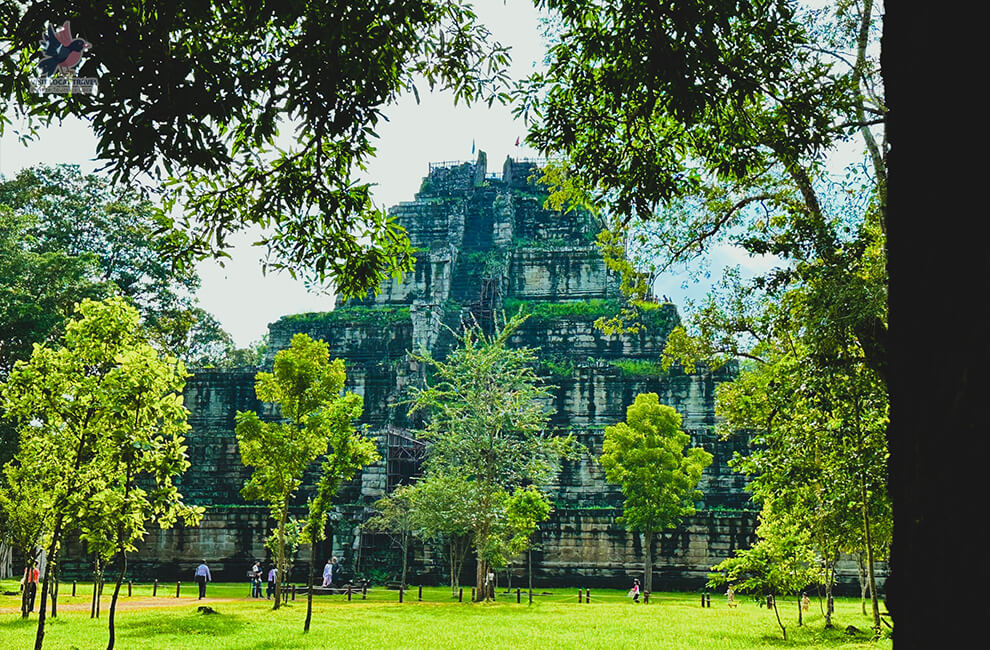
The undisputed highlight of Koh Ker, and the reason most visitors make the long journey, is Prasat Thom complex and its iconic seven-tiered pyramid, known as the Prang.
Rising 36 meters (118 feet) high, the Prang is a radical departure from the classic Khmer temple-mountain design seen at Angkor Wat or Bakheng. Its sheer, dramatic tiers create a striking silhouette against the jungle skyline. Climbing to its summit (which is permitted via a sturdy wooden staircase on one side) is the culmination of the Koh Ker experience. From the top, you are rewarded with a breathtaking 360-degree view of the endless, emerald-green Cambodian forest—a powerful reminder of why this location was both chosen for its symbolism and ultimately abandoned.
The pyramid was originally crowned by a gigantic linga, a symbol of the Hindu god Shiva, which, according to an inscription, was over 4 meters tall and made of solid gold. This immense treasure has long since vanished, but the sense of awe it inspired remains.
Beyond the Pyramid: The Wider Koh Ker Complex
While the Prang is the star, to reduce Koh Ker to a single monument is to miss its true significance. The archaeological site is vast, covering an area of approximately 81 square kilometers, with a central area of about 35 square kilometers containing the majority of the ruins.
Over 180 monuments have been identified, ranging from small, crumbled brick shrines to large temple complexes. Many are swallowed by the jungle, accessible only by precarious footpaths, offering a true “Indiana Jones” experience. Some key sites to explore include:
- Prasat Pram: Famous for its charming towers engulfed by the sprawling roots of strangler fig trees.
- Prasat Krahom (“Red Temple”): Named for the red brick from which it was constructed, it features beautifully carved lintels.
- Prasat Neang Khmau (“Black Lady Temple”): A two-story brick structure with a unique design.
- The Rahal Baray: A massive man-made reservoir measuring 1,200 by 560 meters, which would have supplied water to the ancient capital.
Exploring these outlying temples often means having them completely to yourself, with only the sounds of the jungle for company.
A Comprehensive Travel Guide to Koh Ker
Getting There:
Koh Ker is located about 120 kilometers northeast of Siem Reap and 72 kilometers southwest of the templePreah Vihear. The journey from Siem Reap takes between 2.5 to 4 hours by car or van, depending on the season and the vehicle. The roads have improved significantly but the last section can still be rough.
- Private Car/Taxi: The most comfortable and common option. You can hire a driver for a day trip from Siem Reap. Cost is typically $100-$150 for the car for the day.
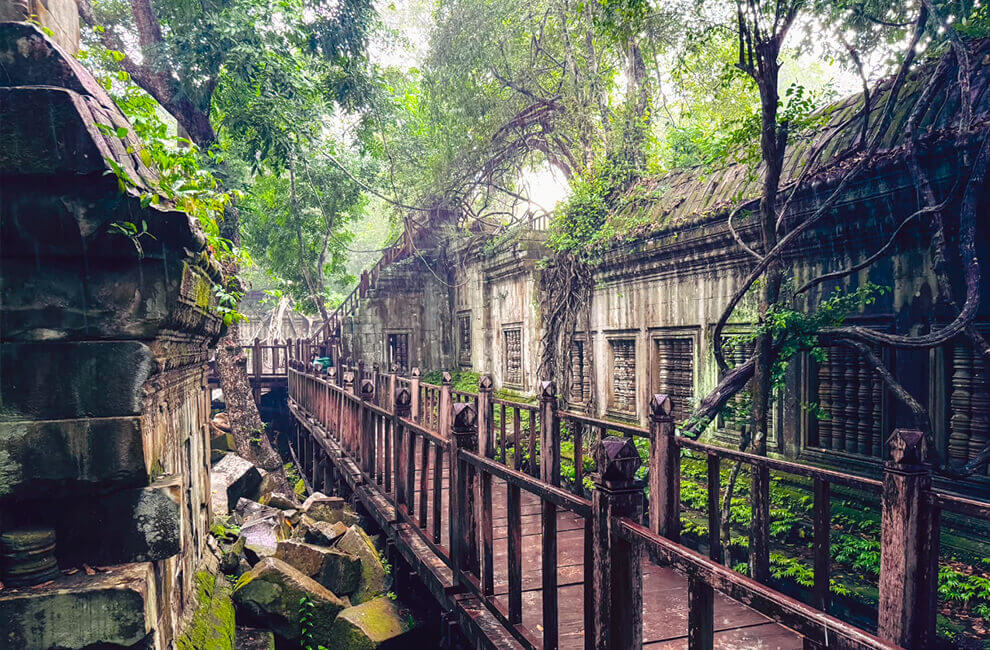
- Tour Van: Many tour companies in Siem Reap offer shared or private day tours to Koh Ker, often combined with Beng Mealea temple, which is on the way.
- Motorbike: Only for the very experienced and adventurous. The distances are long, it’s extremely hot, and roadside assistance is non-existent.
Best Time to Visit:
- Dry Season (November – March): This is the ideal time. The weather is cooler (by Cambodian standards) and the roads are in the best condition. The dust is minimal.
- Shoulder Seasons (April-May, October): Very hot, especially in April and May, but manageable. Afternoon showers are possible in October.
- Wet Season (June – September): It is a green season, the jungle is lush and vibrant, but the red dirt roads can become impassable quagmires. Some remote temples may be completely inaccessible.

Koh Ker
Beng Mealea Temple Tour
What to Bring:
- Water: Lots of it. It is incredibly hot and humid, and there are no vendors inside the complex.
- Sturdy Shoes: Essential for climbing the pyramid and exploring jungle trails.
- Sun Protection: Hat, sunglasses, and high-SPF sunscreen are non-negotiable.
- Insect Repellent: The jungle is home to many mosquitoes.
- Cash: For your ticket, your driver, and any snacks or drinks available at the parking area.
Itinerary Suggestions:
A day trip from Siem Reap is the most practical way to visit. A classic and highly recommended combination is to visit Beng Mealea (a spectacular jungle-entangled temple) on the way to Koh Ker. This makes for a long but immensely rewarding day focused on the wilder side of Khmer architecture.
The Deeper Value of the Ticket
While $15 may seem steep compared to other local expenses, it represents far more than just an entry fee. It is an investment in preservation. The remote location of Koh Ker makes it expensive and logistically challenging to protect, conserve, and research. Your contribution helps fund the vital work of archaeologists clearing vegetation, stabilizing structures, and preventing looting. It also supports the local community that provides services around the site.
In conclusion, the Koh Ker temple ticket price is a small gateway fee to one of Southeast Asia’s most awe-inspiring and least-visited archaeological wonders. It’s not just a transaction; it’s your contribution to safeguarding a lost capital for future generations. The journey is long, the climate is demanding, but the reward—standing atop a pyramid in the silent, deep jungle—is an experience that transcends the mere cost of admission and becomes a memory of a lifetime.