
Siem Reap, whose name translates poetically to “Siam Defeated,” is a city that hums with a different kind of victory—the triumph of spirit, resilience, and timeless beauty and this Two-Day Journey will discover. It is the gateway to one of the most magnificent archaeological sites on earth, the Angkor Archaeological Park.
A journey here is more than a vacation; it is a pilgrimage into the heart of the Khmer Empire, a profound encounter with history etched in sandstone, and a chance to connect with Cambodia’s living culture and natural world. This meticulously crafted two-day tour offers the perfect synthesis of awe-inspiring ancient wonders and a heartwarming, ethical encounter with its majestic wildlife, creating a travel experience that is as deep as it is unforgettable.
First Day: The Legacy of Gods and Kings – A Journey Through the Angkor Complex
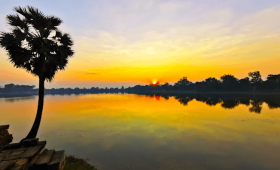
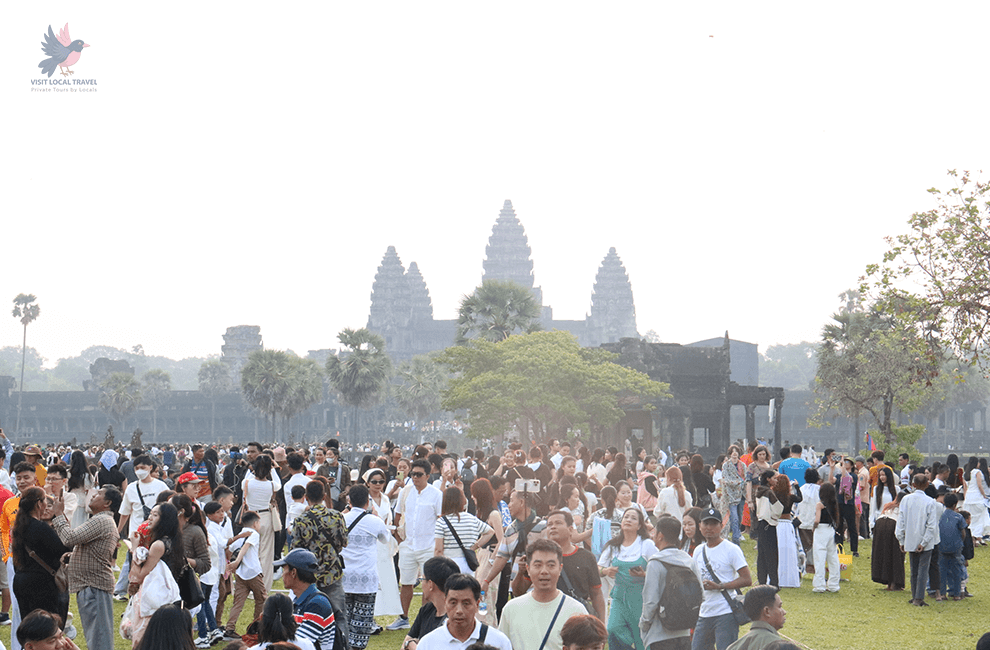
Your adventure begins in the pre-dawn darkness, a time of quiet anticipation. You are heading towards the world’s largest religious monument, a structure so grand it was conceived as a earthly representation of the Hindu cosmos: Angkor Wat. As the first rays of the sun pierce the horizon, the iconic five lotus-bud towers are silhouetted against a canvas of fiery orange and soft purple. This moment of sunrise is more than a photo opportunity; it is a spiritual awakening. The reflection of the temple in the surrounding moat completes the celestial illusion, a breathtaking start to your Cambodian odyssey.
After the sun has risen, you will cross the vast moat and step into a world of unparalleled scale and intricate detail. Your guide will lead you through the galleries, whose bas-reliefs are not mere carvings but epic narratives in stone. You will witness the famous “Churning of the Ocean of Milk,” a vivid depiction of gods and demons battling for the elixir of immortality. As you ascend to the central sanctuary, you feel the weight of centuries and the devotion of the kings who built this masterpiece for the god Vishnu.
Next, you journey to the last great capital of the Khmer Empire: Angkor Thom, or “the Great City.” You enter through its impressive South Gate, a dramatic causeway lined with stone gods and demons holding the body of a giant serpent, Naga. This is your passage into a fortified city that was once home to over a million people.
At the very heart of Angkor Thom lies its enigmatic centerpiece, the Bayon Temple. Just as you begin to comprehend its structure, you see them—the serene, smiling faces, 216 of them, gazing out from 54 towers in every direction. These are the faces of Avalokiteshvara, the Bodhisattva of Compassion, bearing a striking resemblance to the king himself, Jayavarman VII. It is an overwhelming and mesmerizing sight, a forest of stone smiles that has captivated travelers for centuries.
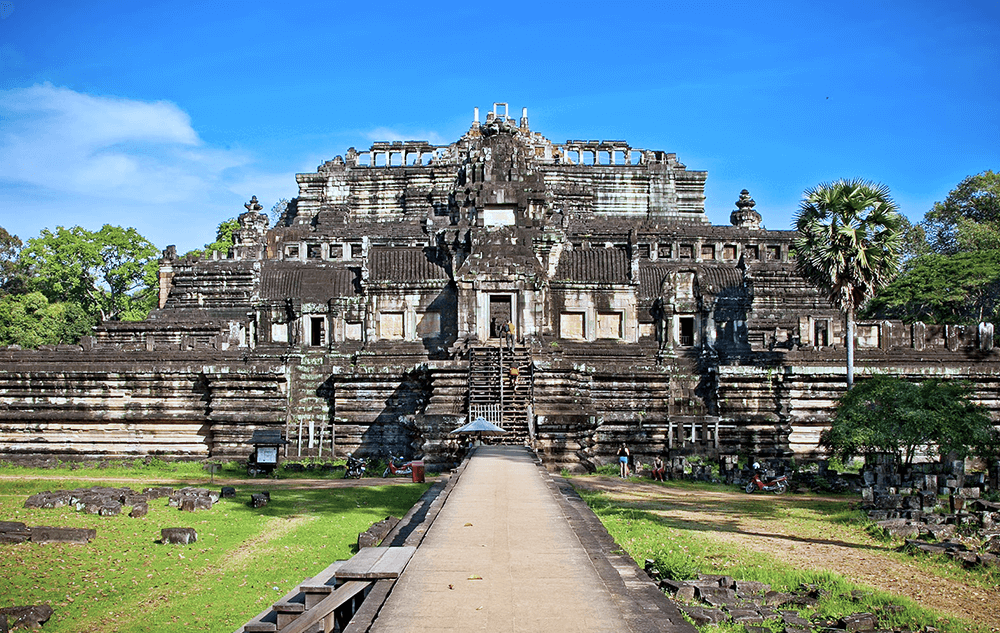
Nearby, the journey continues with the towering Baphuon, a massive pyramid temple representing Mount Meru, and the grand Terrace of the Elephants. Stretching for 300 meters, this terrace was the king’s grand reviewing stand for public ceremonies and processions. Its intricately carved walls are adorned with garudas and, as the name suggests, a parade of majestic elephants, bringing to life the pomp and power of the ancient Khmer court.
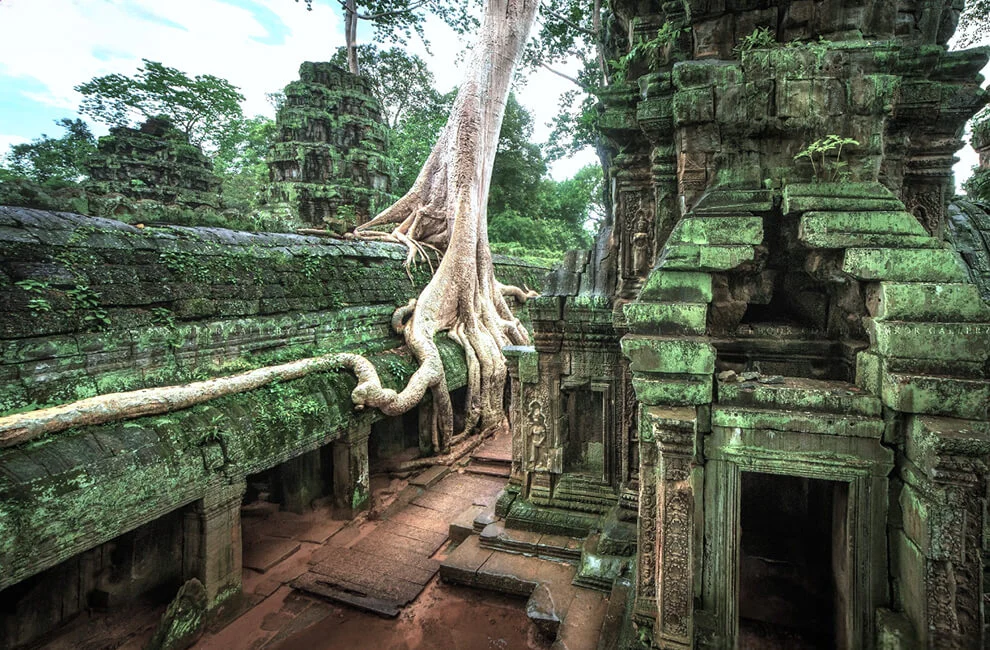
From the grandeur of royal terraces, you move to one of Angkor’s most photogenic and evocative ruins: Ta Prohm. Unlike other temples that have been meticulously cleared of jungle, Ta Prohm has been left largely as it was found, locked in the stranglehold of nature. Sprawling silk-cotton and strangler fig trees have woven their roots through the stonework, their muscular tendrils gripping the towers and terraces like giant serpents. Made famous by the film Tomb Raider, Ta Prohm is a powerful reminder of the impermanence of even the greatest empires and the relentless, beautiful power of nature.
Our final stop on this monumental first day is Prasat Kravan. This temple offers a different aesthetic, renowned for its unique red brick architecture. Unlike the state-sponsored mega-temples, Prasat Kravan feels more intimate. Its claim to fame lies in the detailed brick carvings inside its towers, particularly the striking image of Vishnu riding his garuda. It is a quiet, contemplative end to a day packed with unforgettable sights, allowing for a moment of reflection on the deep cultural immersion you have just experienced.
Second Day: Gentle Giants and the Citadel of Women and Wildlife Tour
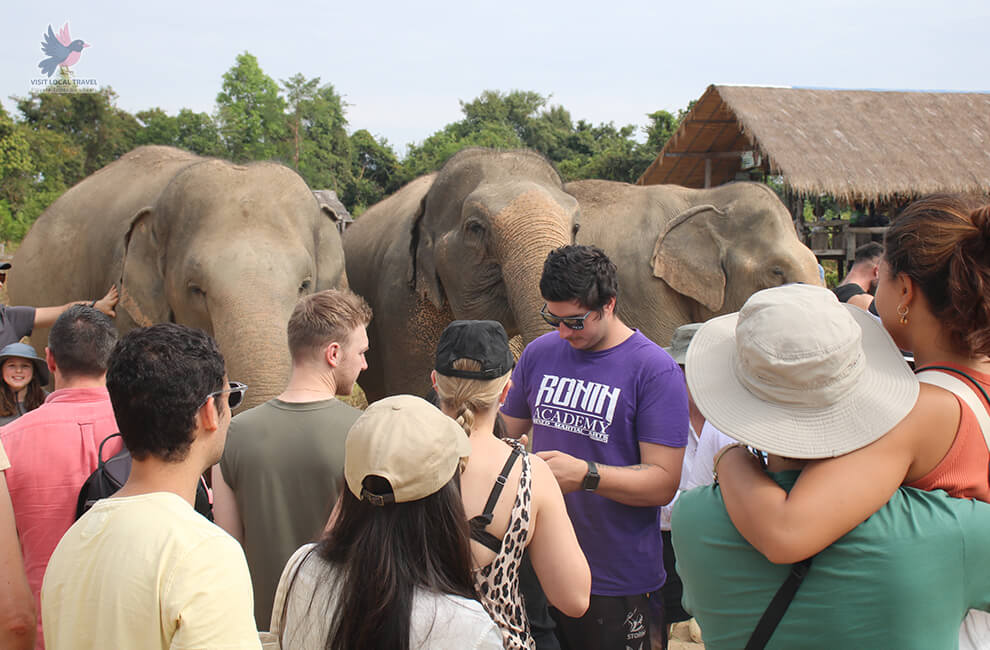
After a day spent amidst ancient stones, day two offers a beautiful contrast—a chance to connect with the living, breathing soul of Cambodia. You will travel to a local Elephant Sanctuary, an ethical establishment dedicated to the rescue and care of these gentle giants. This is not a place for riding; it is a place for understanding, respect, and connection.
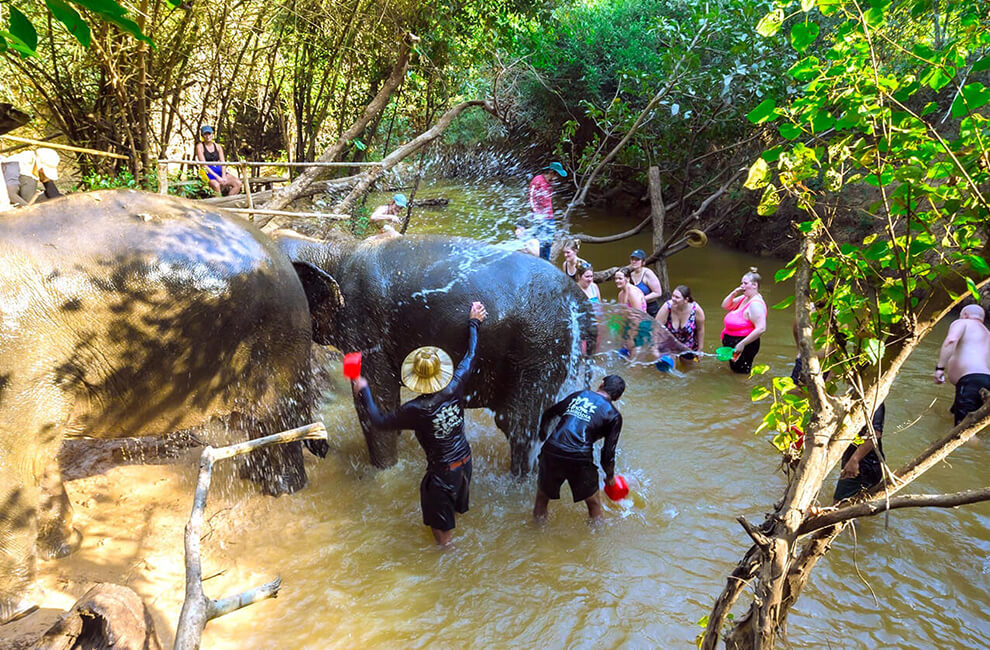
Your experience begins with an education. You will learn about the individual stories of the sanctuary’s residents, their personalities, and their pasts from a knowledgeable guide. Then, you roll up your sleeves for a hands-on experience, preparing special food bundles for the elephants. The interaction that follows is pure magic: feeding them, walking alongside them, and then joining them for a playful mud bath.
This is not just fun; the mud acts as a natural sunscreen and insect repellent for the elephants. The experience culminates in helping to rinse them off in a nearby pond, a joyful and heartwarming connection that you will carry with you long after you leave. The morning finishes with some relaxing downtime, simply observing these magnificent creatures in a safe and loving environment.
Around noon, you will break for a well-deserved and optional lunch, sampling delicious local Khmer cuisine.
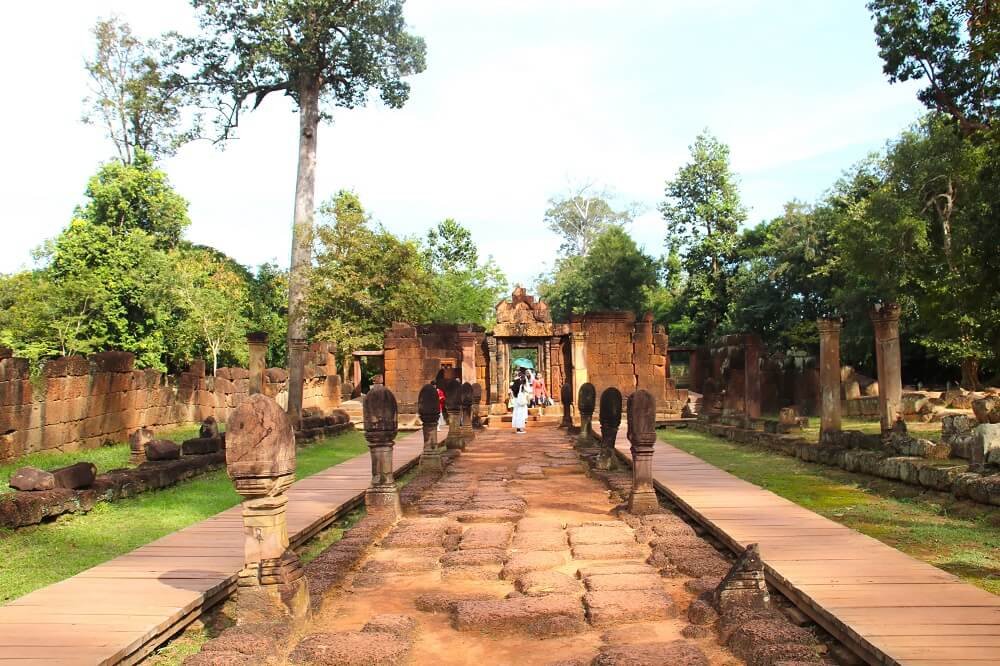
Refreshed and with your spirit full, the afternoon is dedicated to exploring temples of a different character. Your first stop is the exquisite Banteay Srei, known as the “Citadel of Women.” Located a bit farther from the main complex, the journey is well worth it. Banteay Srei is carved from a distinctive pink sandstone that allows for a level of detail unmatched anywhere in Angkor. The carvings are so fine and deep they look like woodwork rather than stone. Dedicated to the Hindu god Shiva, every surface is covered with breathtakingly intricate devatas (goddesses), floral motifs, and mythological scenes. It is a masterpiece of Khmer art, a jewel box in the jungle.
On the return journey towards Siem Reap, you will visit Banteay Samre. This temple, less frequented by tourists, offers a peaceful and spacious atmosphere. Its name derives from the Samre people who once inhabited the region, and its architecture shows a strong influence from Angkor Wat, with a tall central tower and beautifully preserved library buildings.
The final cultural stop of your tour is Preah Dak village. This is a chance to see contemporary Cambodian life and traditional crafts. You might see locals producing rice-paper wrappers for spring rolls, weaving baskets, or creating other handicrafts. It’s a poignant and important reminder that the legacy of the Angkorian people continues in the vibrant, resilient communities of today.
Getting Your Own Two-Day Journey in Siem Reap
This two-day journey is more than a checklist of sights; it is a carefully woven tapestry that connects the epic scale of ancient kingdoms with the intimate, compassionate encounter with nature and modern culture. From the divine heights of Angkor Wat to the playful mud of the elephant sanctuary, from the enigmatic smiles of Bayon to the delicate pink carvings of Banteay Srei, you will have experienced the many facets of what makes Siem Reap so profoundly special.
To embark on this unforgettable adventure, you can book the complete tour package, which seamlessly blends these two incredible days, through this link: Angkor Wat & Elephant Sanctuary Tour.
Prepare to have your perspective shifted, your heart opened, and your imagination captured by the enduring magic of Siem Reap.