

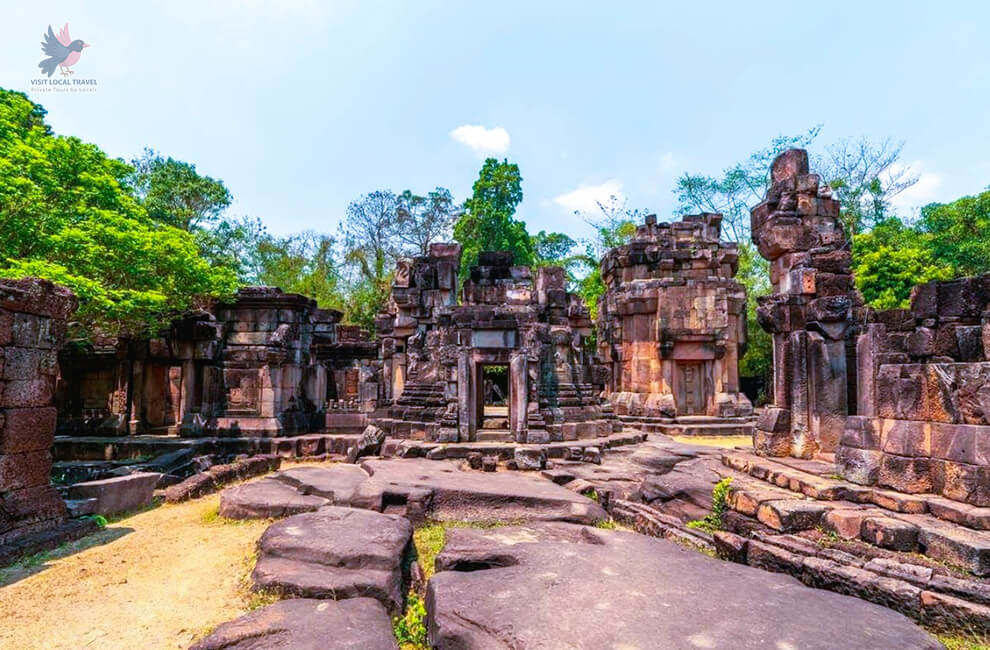
Prasat Ta Muan Thom (ប្រាសាទ តាមាន់ធំ) is an ancient Khmer temple located in Oddar Meanchey province, Cambodia, near the contentious border with Thailand. Believed to have been constructed in the 11th century during the height of the Khmer Empire, this Hindu temple showcases classic Khmer architecture with influences from the Bayon style. Built primarily of sandstone and laterite, the temple features key elements such as a central sanctuary, a covered walkway, gopuras (gateway towers), and a perimeter wall.
Despite its historical and architectural significance, Prasat Ta Muan Thom has been at the center of a long-standing territorial dispute between Cambodia and Thailand. Both nations claim ownership of the temple, leading to periodic military tensions in the area. Due to these conflicts, access to the temple has been restricted in recent years, making it one of the more enigmatic and politically sensitive heritage sites in the region.
History of Ta Muan Thom Temple
Ta Muan Thom Temple was likely built during the reign of Udayadityavarman II (1181–1218 CE), a prolific builder who commissioned numerous temples, hospitals, and roads across the Khmer Empire. The temple served as a rest house along the ancient highway connecting Angkor to Phimai (in present-day Thailand). This route was part of a vast network of roads that facilitated trade, military movement, and religious pilgrimages.
The temple’s architecture reflects a mix of Hindu and Buddhist influences, with some elements resembling the Bayon style, characterized by serene-faced towers. Over the centuries, Ta Muan Thom, like many other Khmer temples, fell into disuse and was gradually reclaimed by the jungle.
The Border Dispute
The modern history of Ta Muan Thom is overshadowed by the Cambodia-Thailand border conflict. The temple lies in a disputed zone where both countries have overlapping territorial claims. The disagreement stems from differing interpretations of early 20th-century maps drawn by French colonial authorities.
Tensions escalated in 2008 when UNESCO designated the nearby Preah Vihear Temple as a World Heritage Site under Cambodia’s stewardship, leading to military clashes near Ta Muan Thom. In 2011, skirmishes between Cambodian and Thai forces resulted in casualties and temporary evacuations of nearby villages. Although tensions have eased since then, the area remains heavily militarized, and access to the temple is often restricted.
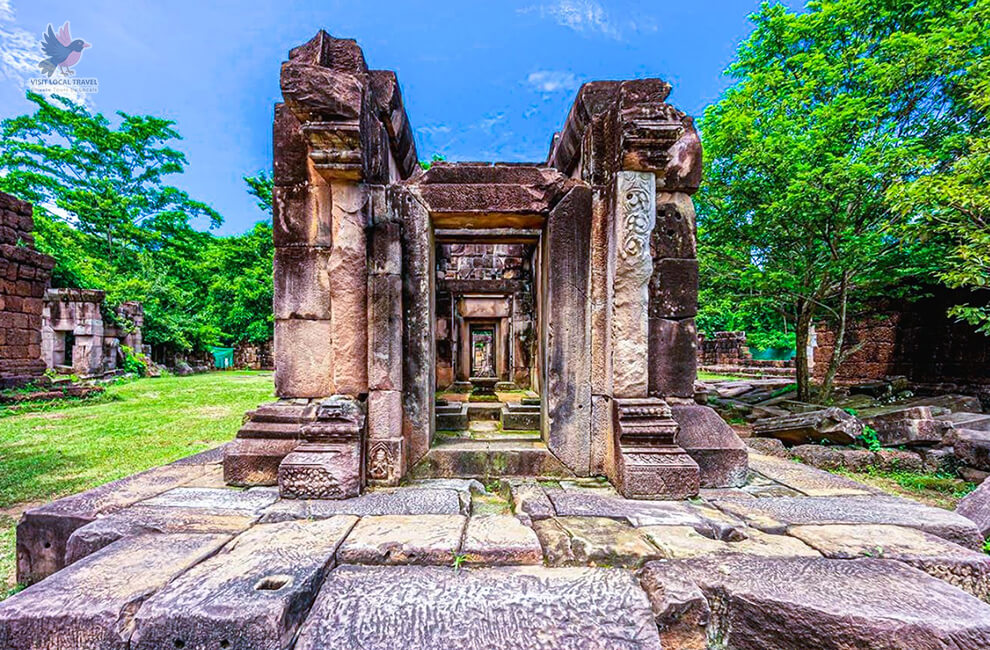
Location of Prsat Ta Muan Thom
Ta Muan Thom Temple is situated in Oddar Meanchey province, northern Cambodia, approximately 25 kilometers from the better-known Preah Vihear Temple. The temple sits atop the Dangrek Mountains, which form a natural border between Cambodia and Thailand. Due to its strategic position, the site has been a focal point of military and diplomatic disputes.
How to Get There
Given the temple’s sensitive location, visiting Ta Muan Thom is challenging. As of recent reports, the temple is closed to the public due to ongoing security concerns. However, if access is permitted in the future, here’s how travelers could potentially reach it:
- By Road: The journey from Siem Reap to Oddar Meanchey takes about 3-4 hours by car or bus.
- Military Checkpoints: Visitors must pass through military-controlled areas, and permission may be required.
- Final Approach: The last stretch involves a steep climb up the Dangrek Mountains, often requiring a 4×4 vehicle.
Travel Guide to Ta Muan Thom
Best Time to Visit
- Dry Season (November – April): The roads are more accessible, and the weather is cooler.
- Avoid the Rainy Season (May – October): Mountain paths become slippery and dangerous.
What to See
- Central Sanctuary: The main temple structure with intricate carvings.
- Covered Walkways: Typical of Jayavarman VII’s architectural style.
- Gopuras (Gateways): Decorative towers marking temple entrances.
- Perimeter Wall: Enclosing the sacred space, built from laterite and sandstone.
Safety Considerations
- Military Presence: The area is patrolled by armed forces; follow all instructions.
- Landmines: Some zones near the border may still have unexploded ordnance—stick to marked paths.
- Travel with a Guide: Due to the complex political situation, hiring a local guide is highly recommended.
Nearby Attractions
- Preah Vihear Temple: Another stunning (and disputed) Khmer temple, accessible via a different route.
- Koh Ker: An ancient Khmer capital with a striking pyramid temple.
- Anlong Veng: A historical site linked to the Khmer Rouge, offering insight into Cambodia’s modern history.
Conclusion
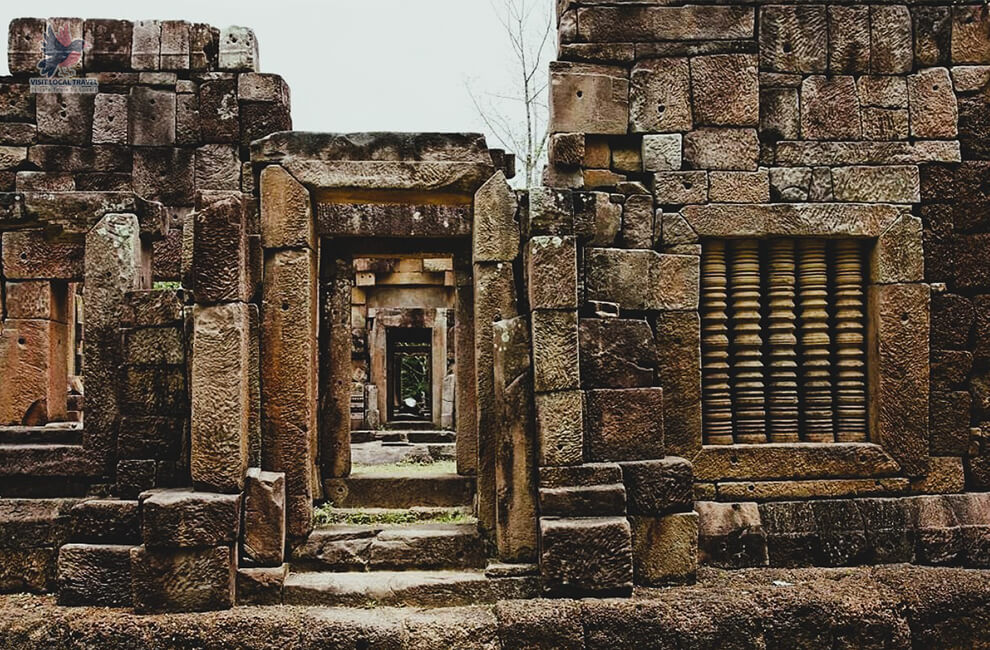
Prasat Ta Muan Thom stands as a testament to Cambodia’s rich Khmer heritage, yet its story is marred by modern geopolitical strife. While its remote location and political sensitivity make it difficult to visit, the temple remains an important symbol of cultural pride and historical continuity for Cambodia. For now, most travelers can only admire it from afar, hoping that future resolutions will allow this architectural gem to be safely explored by the public once again.
For those interested in Cambodia’s ancient temples, Ta Muan Thom represents not just a relic of the past but also a reminder of how history continues to shape the present. Until access is restored, visitors can explore other magnificent Khmer sites such as Angkor Wat, Beng Mealea, and Banteay Chhmar, which offer equally breathtaking insights into the grandeur of the Khmer Empire.