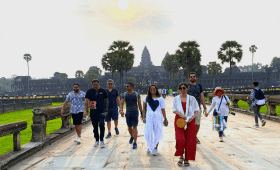

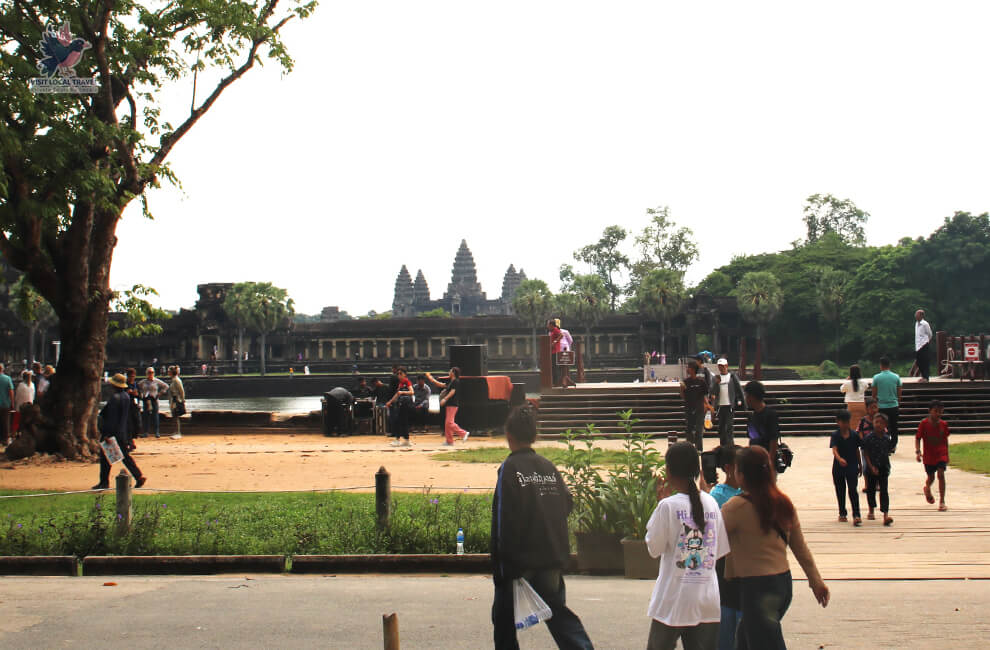
Imagine a temple so grand, so spiritually significant, and so architecturally audacious that it was built to represent the entire cosmos in stone. This is Angkor Wat. Located in the heart of Cambodia, it is the largest religious monument on Earth, a UNESCO World Heritage Site, and a symbol of national pride that adorns the Cambodian flag.
For travelers from the United States and around the globe, a visit to Angkor Wat is a bucket-list pilgrimage into the heart of the ancient Khmer Empire. This guide is your essential companion, designed to take you beyond the postcard image. We’ll dive deep into its incredible history, provide practical planning advice, and offer insider tips to help you experience the magic of Angkor for yourself.
Unveiling the Mysteries – Key Angkor Wat Facts
Before you go, understanding the “what” and “why” will profoundly enrich your experience. Here are the essential facts that make Angkor Wat one of the world’s true wonders.
It’s the Largest Religious Structure in the World
Spread across over 400 acres (162.6 hectares), Angkor Wat’s sheer scale is staggering. To put it in perspective, the entire temple complex is about four times the size of Vatican City. It was built with an estimated 5 to 10 million sandstone blocks, each weighing up to 1.5 tons.
It Was Built as a Hindu Temple, Not Buddhist
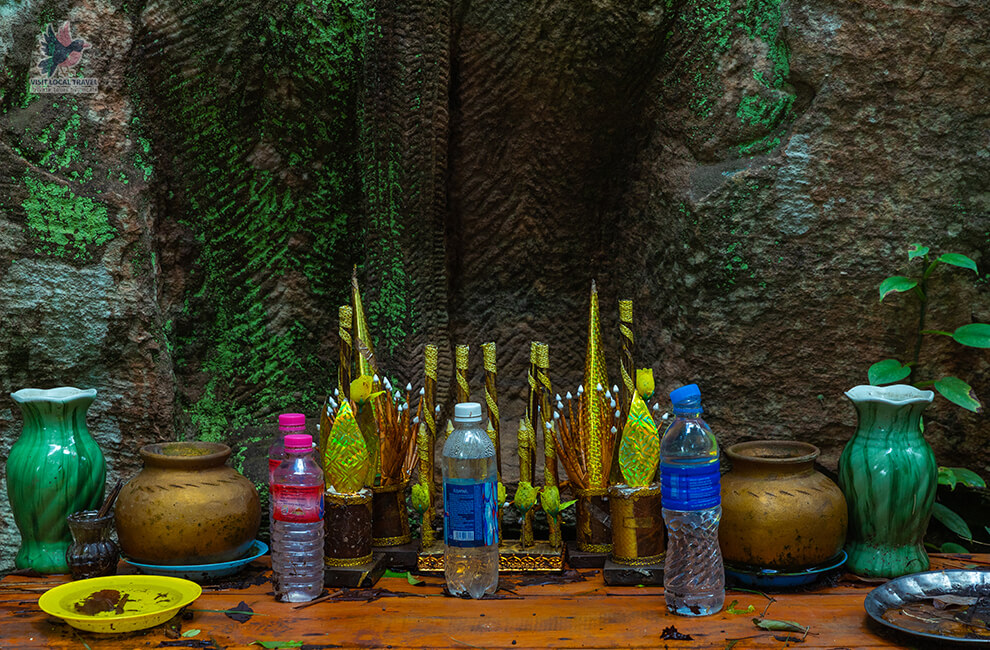
Contrary to what many believe, Angkor Wat was originally constructed in the early 12th century (1116-1150 AD) by King Suryavarman II as a vast Hindu temple dedicated to the god Vishnu. It wasn’t until the end of the 12th century that it gradually transformed into the Buddhist temple it is today, as the state religion shifted.
It’s a Microcosm of the Hindu Universe
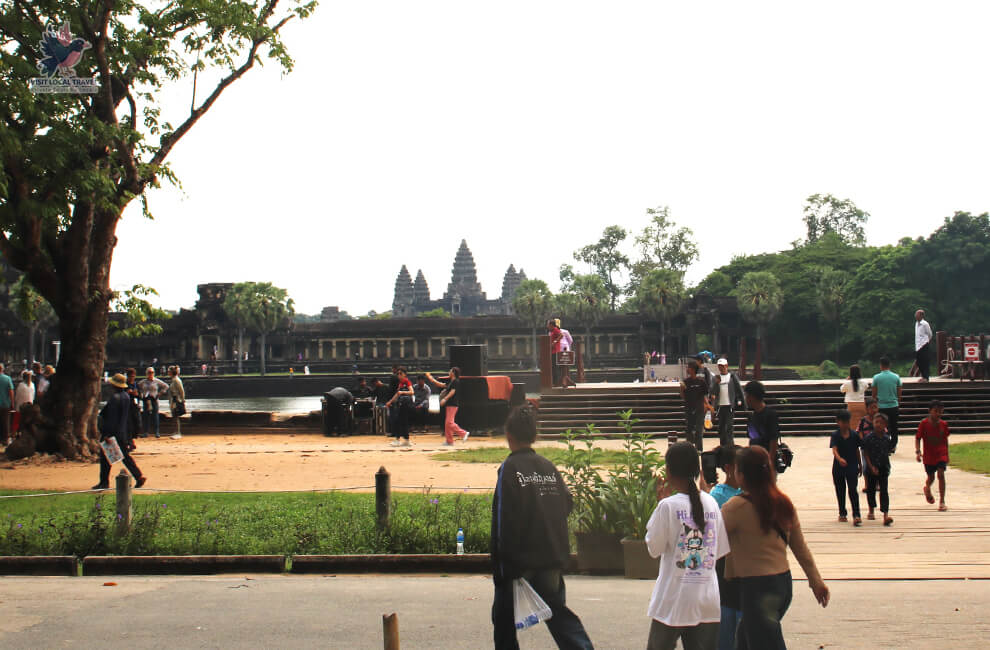
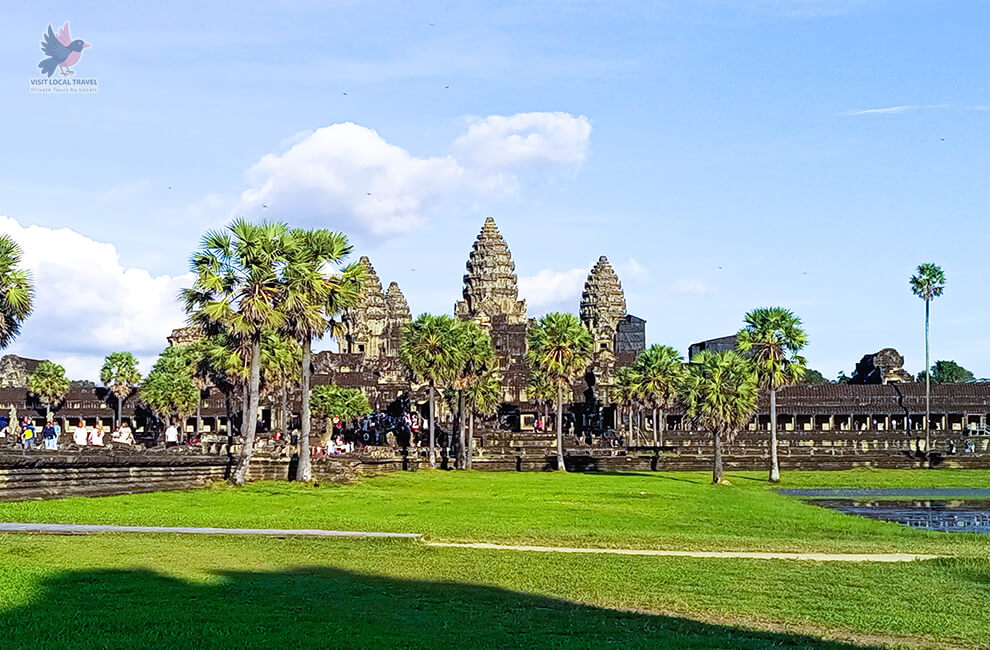
The entire temple is a architectural representation of Mount Meru, the sacred five-peaked mountain at the center of the universe in Hindu, Jain, and Buddhist cosmology. The five central towers symbolize the mountain’s peaks, the surrounding walls represent the mountain ranges, and the massive moat depicts the cosmic oceans.
Siem Reap Short Break Tour
Siem Reap Budget Tour
Cambodia Expedition: Culture, History, Bike, Kayak
The Bas-Reliefs are an Ancient Storybook
The walls of the lowest level are adorned with over 1,200 square meters of intricate bas-relief carvings. These aren’t mere decorations; they are epic narratives depicting:
- The Churning of the Ocean of Milk: A magnificent 49-meter-long panel showing gods and demons tugging on a serpent to create the elixir of immortality.
- The Battle of Kurukshetra: A vivid depiction of the great war from the Hindu epic, the Mahabharata.
- Heaven and Hell: A graphic representation of the 37 heavens and 32 hells, showing the consequences of one’s actions.
- The Army of King Suryavarman II: A historical procession showing the king and his mighty military.
Its Alignment is Astronomically Precise
Angkor Wat is precisely aligned to the west, a direction typically associated with death in Hinduism. This has led scholars to theorize it may have also served as a funerary temple for the king. On the spring equinox, the sun rises directly over the central tower, a spectacular event that demonstrates the Khmer’s advanced understanding of astronomy.
It Was “Lost” to the Western World
While never truly “lost” to the Cambodian people, Angkor Wat was brought to international attention by the French explorer Henri Mouhot in the 1860s. His writings and sketches, describing a “rival to that of Solomon, and erected by some ancient Michelangelo,” captured the Western imagination and began the process of restoration and study that continues today.
Your Practical Guide to Visiting Angkor Wat
Planning is key to a successful and enjoyable trip to the Angkor Archaeological Park, which spans over 400 square kilometers.
Getting There and Entry Passes (The Most Important Step!)
- Base City: You will stay in Siem Reap, the vibrant gateway city located just 6 km (about 4 miles) from Angkor Wat.
- Entry Passes: You MUST purchase an entry pass to visit any temple in the park. Passes are sold at the official Angkor Ticket Center (a large, dedicated building on the road to the temples). They are not sold at the temple entrances. They are sold at the Angkor Enterprise Center with few type of tickets.
- 1-Day Pass: $37
- 3-Day Pass: $62 (valid for 10 days, so you don’t have to use it on three consecutive days)
- 7-Day Pass: $72 (valid for one month).
- Pro Tip: Purchase your pass after 4:45 PM. They will issue it with a start date of the next day, but it allows you to enter the park for free that evening to watch the sunset at Angkor Wat—a fantastic way to get a preview.
2-Day Angkor Wat Private Tour
Easy Angkor Tour: Best 3 Days Tour in
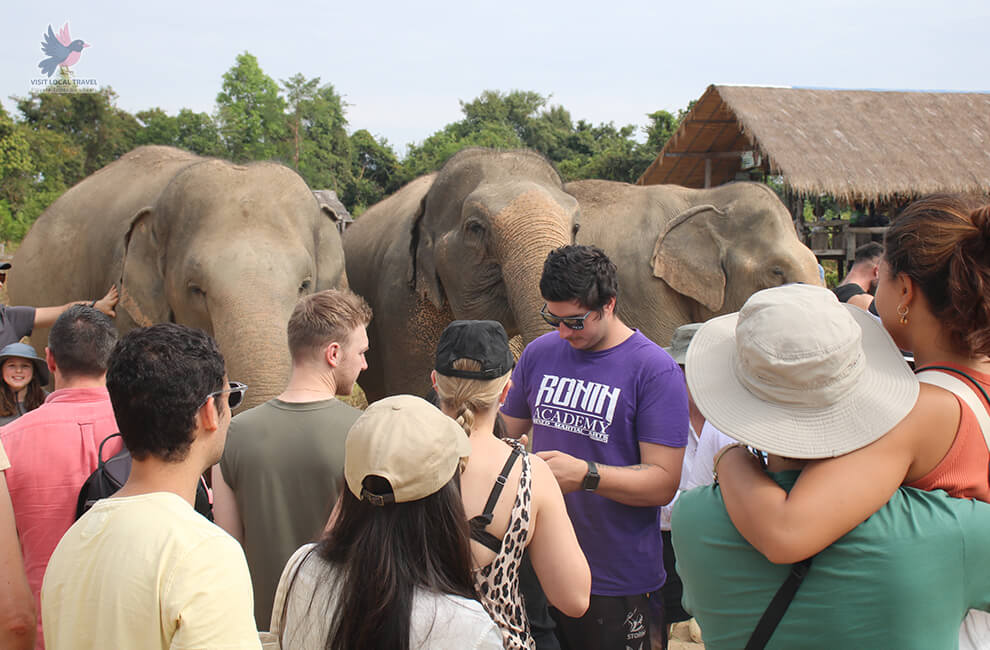
Angkor Wat Temple and Elephant Sanctuary Tour
Getting Around the Temple Complex
The park is vast. You cannot walk between the major temple groups.
- Tuk-Tuk (Remork): The most popular and affordable option. You can hire a driver for a full day (e.g., Small Circuit or Grand Circuit). They are knowledgeable, provide shade, and offer a fun, authentic experience. Agree on a price and itinerary beforehand.
- Private Car / Van: A great option for families, small groups, or those seeking air-conditioned comfort, especially in the hot midday sun. More expensive than a tuk-tuk but faster for covering longer distances.
- E-Bike or Bicycle: A fantastic, eco-friendly option for the fit and adventurous. It gives you great freedom, but be prepared for heat and long distances.
- Guided Tour: Highly recommended for first-time visitors. A licensed guide provides invaluable historical and cultural context that brings the stones to life.
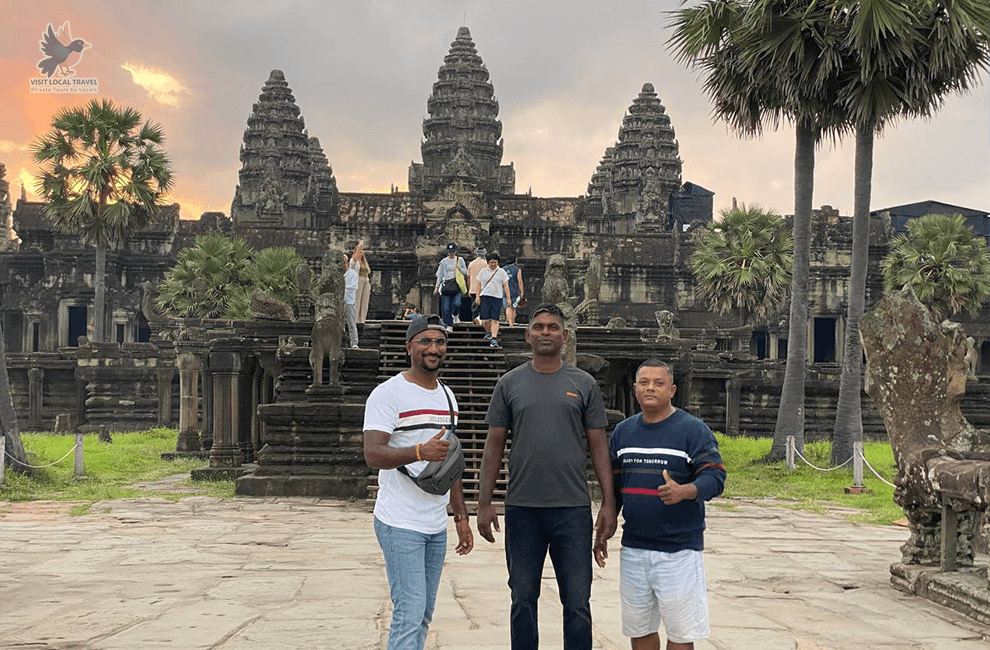
Crafting Your Itinerary: How Many Days Do You Need?
The Classic 1-Day “Highlights” Itinerary
This is a whirlwind but hits the absolute must-sees.
- Pre-Dawn: Arrive at Angkor Wat for sunrise.
- Morning: Explore Angkor Wat after the crowds thin.
- Late Morning: Travel to Angkor Thom (the great walled city) and explore the enigmatic faces of the Bayon Temple.
- Afternoon: Visit the jungle-clad ruins of Ta Prohm (the “Tomb Raider Temple”).
- Sunset: Head to Pre Rup temple for a classic, less-crowded sunset view.
The Ideal 3-Day “In-Depth” Exploration
This allows for a much richer and more varied experience.
- Day 1 – The Small Circuit:
- Sunrise at Angkor Wat.
- Explore Angkor Wat in detail.
- Enter through the South Gate of Angkor Thom.
- Explore the Bayon, Baphuon, and the Royal Enclosure.
- Visit Ta Prohm in the afternoon light.
- Day 2 – The Grand Circuit & Further Afield:
- Sunrise at Srah Srang (a beautiful reservoir).
- Visit Pre Rup, an early temple mountain.
- Explore the intricate carvings of Banteay Srei (the “Citadel of the Women”), located about 40 minutes from the main park.
- Stop at the River of a Thousand Lingas at Kbal Spean on your way back.
- Day 3 – Off the Beaten Path:
- Explore the remote and massive Preah Khan temple.
- Visit the stunning pink-sandstone temple of Banteay Samré.
- Consider a sunset boat trip on the moat of Angkor Thom or on the Tonle Sap lake.
Insider Tips for an Unforgettable Experience
These tips will elevate your visit from a simple tour to a transformative journey.
Conquer the Crowds & Heat
- Start Early: This is the #1 rule. Be at your first temple before sunrise. You’ll avoid the worst of the heat and the largest tour groups.
- Go Against the Flow: Most tour groups follow a standard route. Do the reverse. If everyone is going to Angkor Wat for sunrise, go to Bayon or Srah Srang instead for a more peaceful experience.
- Take a Siesta: The midday sun (11 AM – 3 PM) is brutal. Plan to return to your hotel for lunch, a swim, and a rest. Return to the temples in the cooler, softer light of the late afternoon.
Capture the Perfect Shot
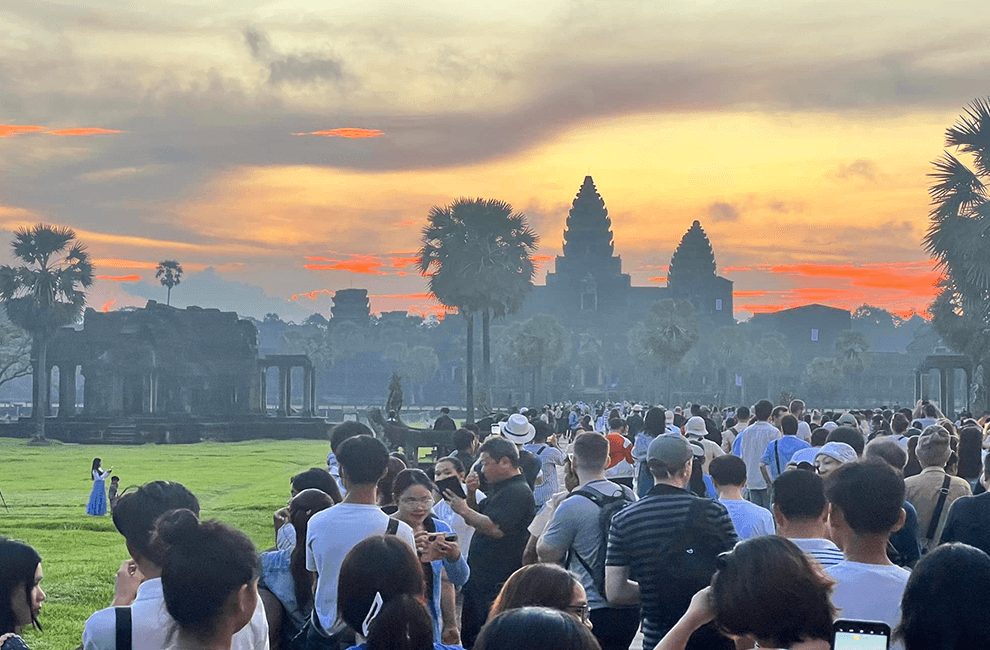
- Sunrise at Angkor Wat: The reflection in the pond is iconic. Arrive at least an hour before sunrise to secure a spot at the left-hand pond (it often has a better reflection).
- The Best Light: The soft light of “golden hour” (just after sunrise and before sunset) is ideal for photography. The harsh midday light washes out details.
- Angkor from Above: For a truly unique perspective, take a tethered helium balloon ride located near Angkor Wat. It offers a breathtaking aerial view of the entire complex.
Dress and Act Respectfully
- Temple Dress Code: Shoulders and knees must be covered to enter the elevated central towers of Angkor Wat and Bayon (known as the “Bakan” area). Carry a light scarf or sarong.
- Respect the Sanctity: These are active religious sites. Speak quietly, don’t point your feet at Buddha images, and avoid public displays of affection.
Health and Safety
- Stay Hydrated: Carry a reusable water bottle and drink constantly. You can easily buy cold water from vendors throughout the park.
- Wear Sturdy Shoes: You will be climbing uneven, steep stone steps. Flip-flops are a bad idea.
- Beware of Monkeys: The macaques are cute but can be aggressive, especially if they see food or plastic bags. Keep your distance and secure your belongings.
Go Beyond Angkor Wat
While Angkor Wat is the star, the Angkor Archaeological Park contains hundreds of other magnificent temples. Don’t miss:
- Bayon: For the mesmerizing, silent faces staring down from 54 towers.
- Ta Prohm: For the dramatic fusion of nature and architecture, with giant silk-cotton trees gripping the ruins.
- Banteay Srei: For the finest, most intricate carvings in all of Angkor, made from pink sandstone.
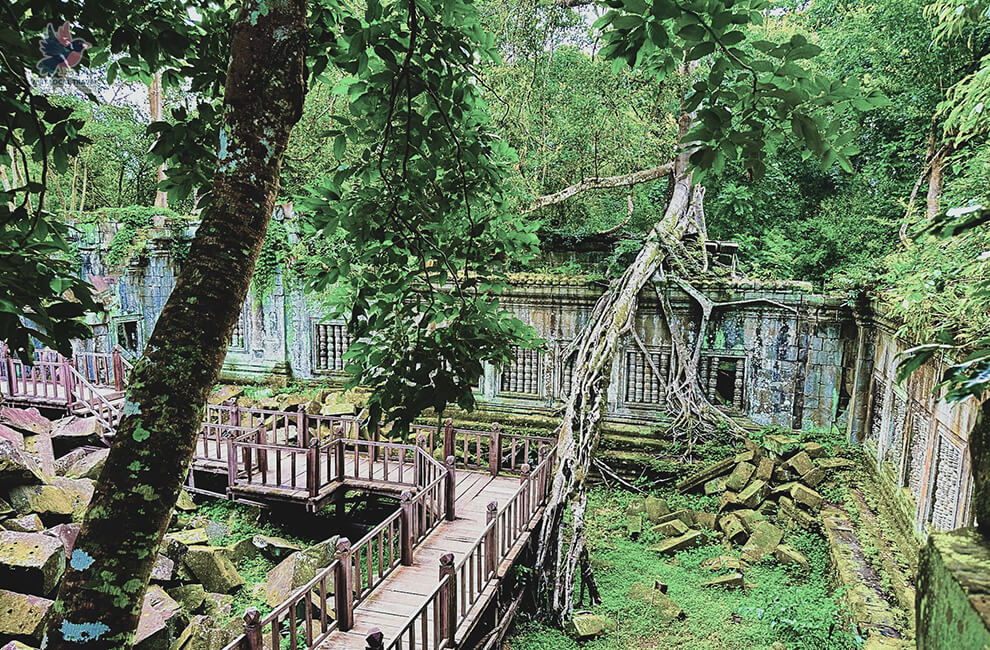
- Beng Mealea: A truly jungle-ravaged temple about an hour’s drive away, offering a raw, Indiana Jones-style adventure.
Conclusion: More Than Just a Temple
Angkor Wat is not merely a collection of ancient stones; it is a testament to human ambition, spiritual devotion, and artistic genius. It’s a place where history whispers from every corridor and where the jungle has woven itself into the fabric of the divine.
With this guide in hand, you are now equipped to explore this wonder with knowledge, respect, and a sense of adventure. Your journey to Angkor Wat will be more than a vacation—it will be an encounter with one of humanity’s most sublime achievements.
Start planning your trip to Cambodia today, and prepare to be humbled by the enduring legacy of the Khmer Empire.