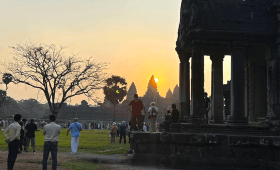

The Angkor Equinox is one of the world’s most mesmerizing celestial events, where the ancient Khmer architects’ astronomical mastery aligns perfectly with nature’s rhythms. Occurring twice yearly around September 21-23, this phenomenon draws thousands of visitors to witness the sun rising directly over the temple’s central tower, creating a breathtaking visual harmony between human creation and cosmic movement. This guide provides everything you need to plan an unforgettable September equinox experience at Cambodia’s iconic temple complex.
Understanding the Equinox Phenomenon
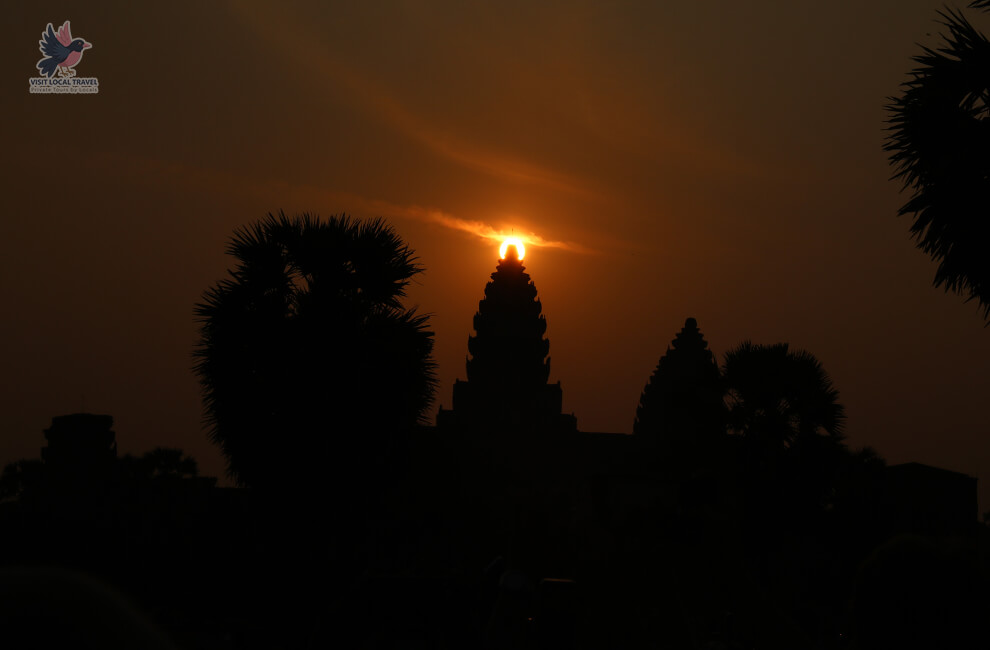
The equinox occurs when the sun crosses the Earth’s celestial equator, resulting in nearly equal day and night duration worldwide. At Angkor Wat, this astronomical event transforms into a spiritual spectacle as the first rays of sunlight crown the central tower, creating the illusion that the sun is perfectly balanced atop the ancient structure.
The ancient Khmers demonstrated extraordinary precision in aligning their architecture with celestial movements. While no epigraphic evidence confirms they celebrated the equinox, the perfect architectural alignment suggests intentional design, possibly representing the balance between physical and spiritual worlds or serving as a calendar marker for agricultural or religious events.
Table: Angkor Equinox Dates for 2025-2026
| Year | Spring Equinox | Autumn Equinox |
|---|---|---|
| 2025 | March 20-21 | September 21-23 |
| 2026 | March 21-23 | September 21-23 |
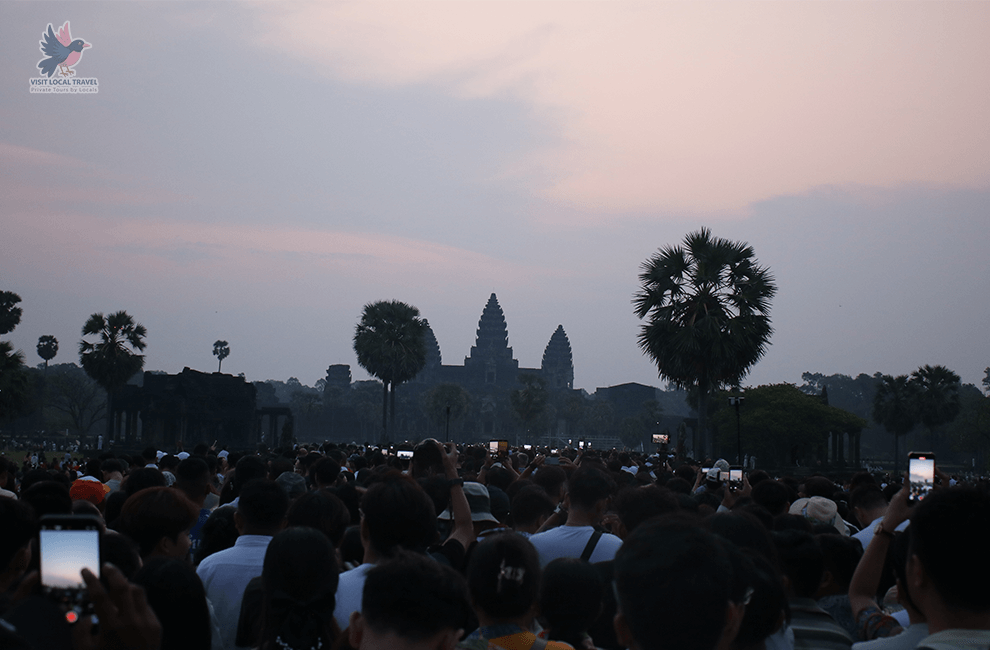
Why September Presents Unique Opportunities
September’s autumnal equinox occurs during Cambodia’s rainy season (May-October), which brings both challenges and advantages. While March’s vernal equinox happens during dry season with more reliable weather, September offers:
- Lush green landscapes from recent rains
- Dramatic cloud formations that enhance photography
- Fewer crowds compared to peak season (though still substantial)
- Full moats and reflection pools creating perfect mirror effects.
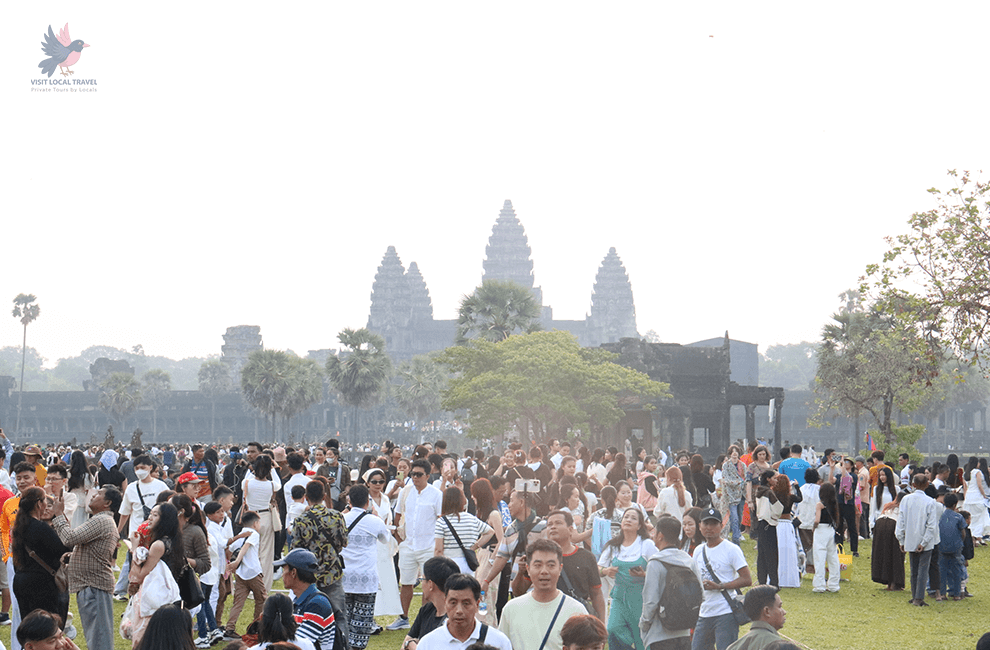
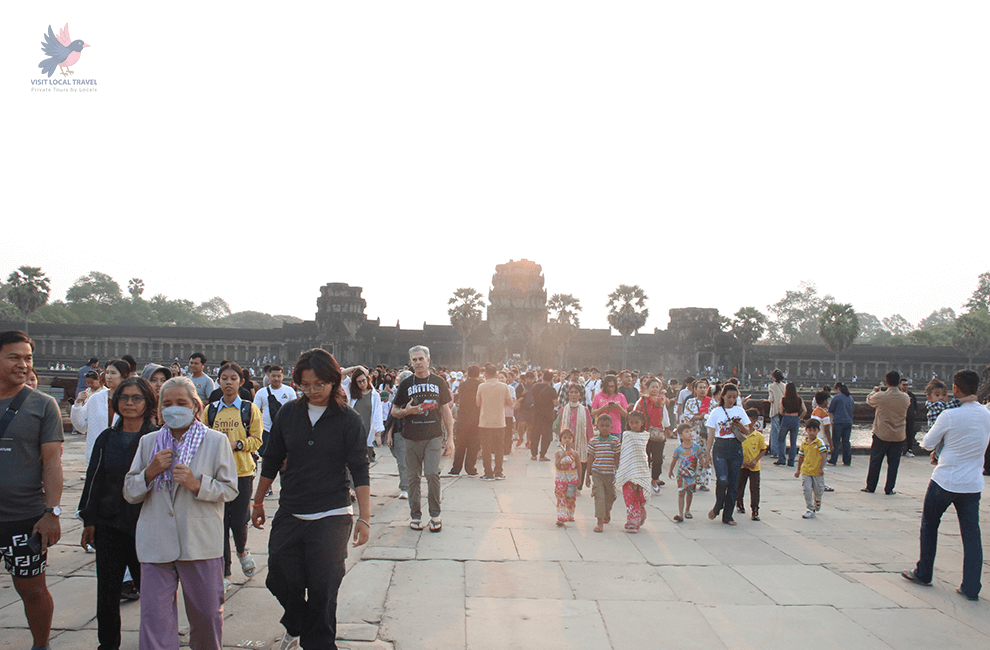
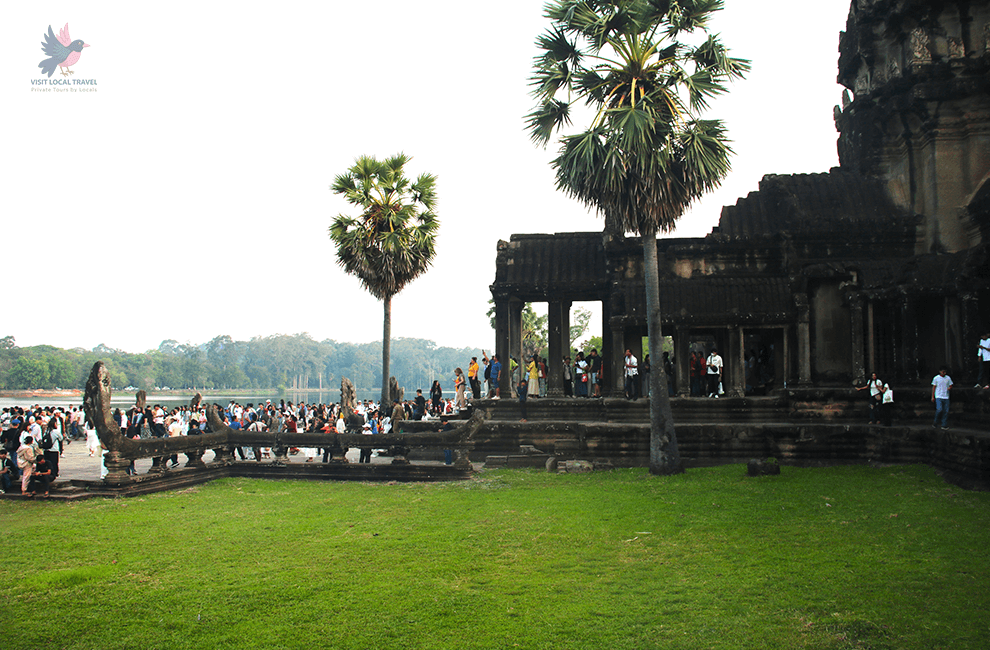
However, September also brings higher humidity and the possibility of overcast skies that might obscure the sunrise. The 2025 September equinox is expected to draw approximately 10,000-12,000 visitors daily, significantly less than the reported 30,000 visitors during the March 2025 equinox.
Optimal Viewing Strategies for the Equinox Sunrise
Prime Viewing Locations
- Reflection Ponds: The classic vantage point offering stunning temple reflections.
- Western Causeway: Provides a direct centerline view of the sunrise alignment.
- North and South Libraries: Alternative perspectives with fewer crowds.
- Outer Moat: Offers peaceful spots with reflection opportunities.
Timing Your Visit
The temple complex opens at 5:00 AM, and arriving early is essential for securing a good spot. The equinox sunrise timeline typically follows this pattern:
- 5:20 AM: Morning twilight begins with light bouncing off clouds
- 6:00 AM: Daybreak arrives as the sun starts emerging behind the temple
- 6:20-6:40 AM: The sun sits perfectly behind the temple’s peak.
Photography Tips
- Bring a tripod for stability in low light conditions
- Use a wide-angle lens to capture the temple grandeur
- Polarizing filters help reduce reflections and enhance sky contrast
- Experiment with different exposures to balance the bright sky and darker temple silhouette.
Essential Planning Considerations
Tickets and Entry
All visitors need an Angkor Archaeological Park pass, available in three options:
- 1-day pass: $37 (sufficient for equinox viewing)
- 3-day pass: $62 (valid for 10 days)
- 7-day pass: $72 (valid for 30 days).
Passes can be purchased at the official ticket office, online at angkorenterprise.gov.kh, or through the mobile app. Buying your pass the day before your equinox visit is highly recommended to avoid morning delays.
Accommodation and Transportation
Book accommodations in Siem Reap several months in advance, as hotels fill quickly during equinox periods. Popular areas include the Old Market and Pub Street for their convenience and vibrant atmosphere.
Transportation options to Angkor Wat (6km north of Siem Reap) include:
- Tuk-tuk: Most popular option ($15-25/day)
- Private car: $40-60/day with air conditioning
- Bicycle rental: $5-10/day (requires early departure)
- E-scooters: Legal for foreigners and available for hire.
Table: Comparative Transportation Options
| Transport | Cost (USD) | Advantages | Considerations |
|---|---|---|---|
| Tuk-tuk | $15-25 | Local knowledge, cultural experience | Limited weather protection |
| Private Car | $40-60 | Air conditioning, comfort | Less immersive experience |
| Bicycle | $5-10 | Exercise, flexibility | Requires fitness, weather issues |
| E-scooter | $10-15 | Independence, affordability | Navigation challenges |

What to Bring on the Angkor Equinox Days
- Flashlight for pre-dawn navigation
- Reusable water bottle with filter (tap water is unsafe)
- Sun protection (hat, sunglasses, sunscreen)
- Rain poncho or umbrella (September is rainy season)
- Portable charger for electronic devices
- Modest clothing covering shoulders and knees.
Beyond the Equinox: Exploring the Temple Complex
While the equinox sunrise is the highlight, the Angkor Archaeological Park offers numerous other treasures worth exploring:
Must-See These Remommended Temples
- Bayon Temple: Famous for its 216 smiling stone faces.
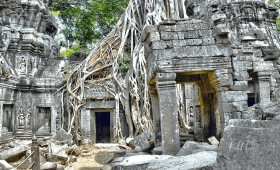
- Ta Prohm: The “Tomb Raider Temple” with trees growing through ruins
- Banteay Srei: Showcases the finest stone carvings in pink sandstone
- Preah Khan: Extensive ruins with fewer crowds.
Recommended itinerary
For a comprehensive experience during your September visit:
- Day 1: Equinox sunrise at Angkor Wat, followed by exploration of Angkor Thom and Bayon
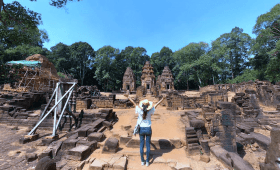
- Day 2: Visit Ta Prohm, Banteay Srei, and other outlying temples
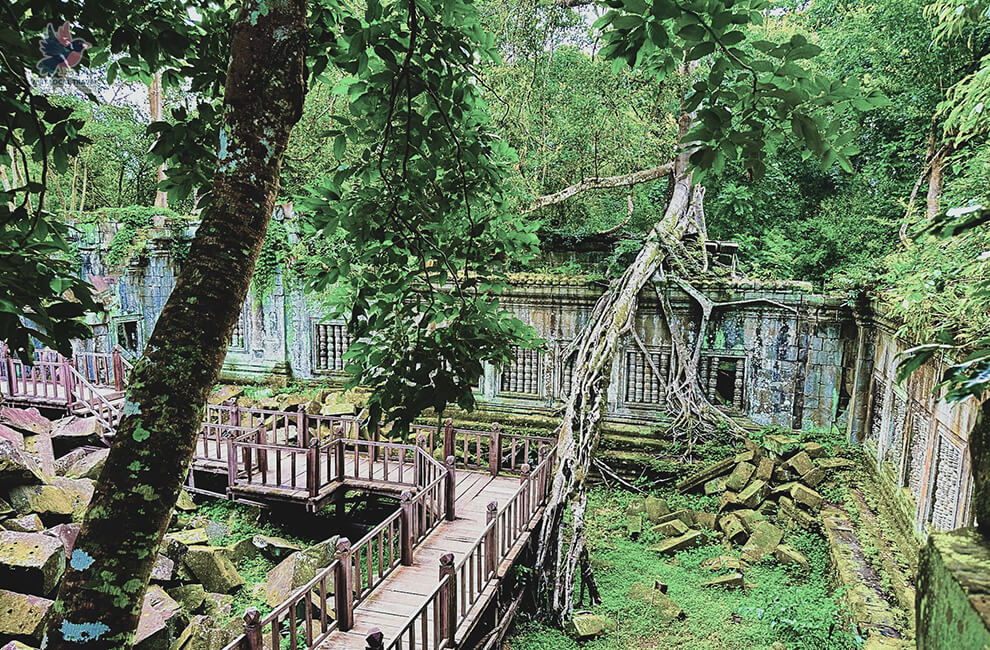
- Day 3: Explore lesser-known temples like Beng Mealea or take a boat trip on Tonlé Sap Lake.
Cultural Etiquette and Practical Tips
Temple Conduct
- Dress modestly with shoulders and knees covered
- Remove shoes before entering certain areas
- Speak quietly and avoid disturbing meditation or prayer
- Avoid touching carvings and structure
Health and Safety
- Stay hydrated in the heat and humidity
- Use insect repellent to prevent mosquito bites
- Wear sturdy shoes with good grip for temple stairs
- Take breaks during the hottest hours (11 AM-2 PM).
Local Engagement
- Learn basic Khmer phrases like “Sous-dey” (Hello) and “Awkun” (Thank you)
- Support local communities by purchasing authentic souvenirs
- Consider responsible tourism practices when visiting floating villages.
Weather Preparedness for September
September falls within Cambodia’s rainy season, with average rainfall of 290mm and temperatures ranging from 24-31°C (75-88°F). While mornings are often clear, afternoon showers are common. Prepare for:
- High humidity levels throughout the day
- Sudden rain showers that typically last 1-2 hours
- Possible muddy conditions on temple paths.
The weather shouldn’t deter your visit—the rain brings lush greenery and fuller moats that enhance photography. Just pack appropriate gear and maintain flexibility in your plans.
Making the Most of Your September Visit
Alternative Activities
If weather affects your temple plans, Siem Reap offers numerous alternative experiences:
- Visit museums like the Angkor National Museum
- Explore markets such as Siem Reap’s Night Market
- Take cooking classes to learn Khmer cuisine
- Enjoy spa treatments featuring traditional techniques.
Extended Cambodia Experiences
Consider expanding your trip beyond Siem Reap:
- Phnom Penh: Cambodia’s capital with royal palaces and historical sites
- Tonlé Sap Lake: Explore floating villages during high water season
- Koh Ker: Remote temple complex with different astronomical alignments.
Conclusion: An Unforgettable Celestial Experience
Witnessing the September equinox at Angkor Wat is a truly magical experience that connects you with ancient astronomical wisdom and Khmer spiritual traditions. While September presents weather challenges, it also offers unique advantages like lush landscapes and fewer crowds compared to the spring equinox.
With careful planning—booking accommodations early, arranging transportation, preparing for weather conditions, and understanding temple etiquette—your September equinox visit can be an unforgettable highlight of your travels. Remember that the equinox alignment occurs over three days, providing multiple opportunities to witness this spectacular event if weather interferes on one morning.
Whether you’re a photographer seeking the perfect shot, a spiritual seeker drawn to sacred energy, or a traveler fascinated by ancient cultures, the Angkor Wat equinox in September offers a profound experience that will create lasting memories long after you’ve returned home.